Key Takeaways:
- Single-boiler machines offer superior thermal mass for temperature stability, though they require sequential workflow and temperature management skills for optimal results
- Thermoblock systems heat up faster (30-60 seconds) but struggle with temperature consistency, often showing ±3°C to ±5°C variations that affect extraction quality
- Single-boiler machines are generally known for their durability and repairability with proper maintenance, often offering a long lifespan
- Temperature stability matters more than speed for home espresso enthusiasts who prioritize consistent, café-quality results
- The choice ultimately depends on whether you value convenience and quick heat-up times over extraction consistency and milk steaming performance
Single-Boiler Machines Deliver Superior Coffee Quality Despite Convenience Trade-Offs
When choosing between single-boiler and thermoblock espresso machines, the decision often comes down to prioritizing either convenience or coffee quality. Single-boiler machines use a dedicated heated water reservoir that provides significant thermal mass, resulting in more stable brewing temperatures and superior steam performance. Thermoblock systems, on the other hand, heat water on-demand as it flows through heated metal blocks, offering faster heat-up times but at the cost of consistency.
The fundamental difference lies in how each system manages heat. Single-boiler machines maintain a large volume of heated water at brewing temperature, creating a thermal buffer that resists temperature fluctuations during extraction. This thermal mass becomes crucial when pulling multiple shots or when the machine needs to maintain steady heat output. This thermal stability generally translates to more consistent extraction and better-tasting espresso.
For home espresso enthusiasts looking to upgrade their coffee experience, understanding these core differences becomes essential for making an informed purchase decision. The choice isn't simply about which machine costs more or heats up faster, it's about which system aligns with your coffee priorities and daily routine.
If you're still weighing which machine to buy — not just which heating system — see our complete guide to espresso machines under $1,000, which covers every major option at this price tier alongside the features that separate them.
| Criterion | Single-Boiler | Thermoblock |
|---|---|---|
| Brew Temperature Stability | ✔ Thermal mass resists fluctuation during extraction. Mode-switch variation: ±4°C–±6°C (less with PID). | ⚠ On-demand heating produces ±3°C–±5°C variation across shots, compounding across consecutive pulls. |
| Heat-Up Time | ⚠ 5–10 minutes to reach optimal brew temperature. | ✔ Ready in 30–60 seconds. |
| Steam Performance | ✔ Powerful, dry steam (~120°C boiler). Consistent pressure for fine microfoam and latte art. | ⚠ Weaker, wetter steam. Larger bubbles, less stable foam — limits milk drink quality. |
| Brew-to-Steam Transition | ⚠ Sequential: brew first, then wait 30 sec–2 min for boiler to climb to steam temperature. | ✔ Faster transitions (15–30 sec), though simultaneous operation not available on most single-thermoblock models. |
| Durability & Repairability | ✔ Simpler architecture, standardised parts. Brass/stainless boilers built for long service. Cost-effective to repair. | ⚠ Compact integrated design makes servicing more complex and costly. Overheating under heavy use is a known concern. |
| Size & Footprint | ⚠ Generally larger. Requires more counter space. | ✔ Compact and lightweight. Well-suited to smaller kitchens. |
| Energy Use | ⚠ Maintains temperature constantly — higher standby energy consumption. | ✔ Heats only on demand — more efficient for occasional use. |
| Best Suited For | Enthusiasts prioritising extraction quality, milk drink performance, and long-term value. Willing to invest time in technique. | Occasional brewers, smaller kitchens, users prioritising speed and convenience over extraction precision. |
Temperature Stability: Why Your Shot's Success Depends on Thermal Control
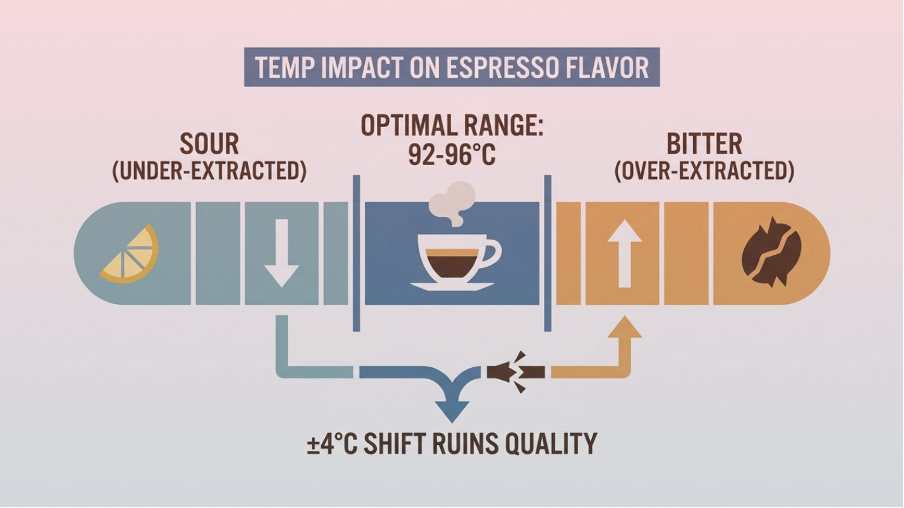 Temperature stability represents the most critical factor in espresso extraction quality. The ideal brewing range falls between 90°C and 96°C, with fluctuations greater than ±1.5°C during extraction leading to noticeably inconsistent flavor profiles. When temperatures run too high, espresso becomes bitter and harsh. Too low, and the result is sour, under-extracted coffee with little sweetness.
Single-Boiler Thermal Mass Advantage
Single-boiler machines excel at maintaining consistent brew temperatures thanks to their substantial thermal mass. The large heated water reservoir acts as a thermal buffer, resisting temperature swings even during extended extractions. However, these machines face their own temperature management challenges. When switching between brewing and steaming modes, single-boiler machines can experience temperature fluctuations typically ranging from ±4°C to ±6°C, and sometimes even wider in models without PID control, requiring techniques like temperature surfing for optimal consistency.
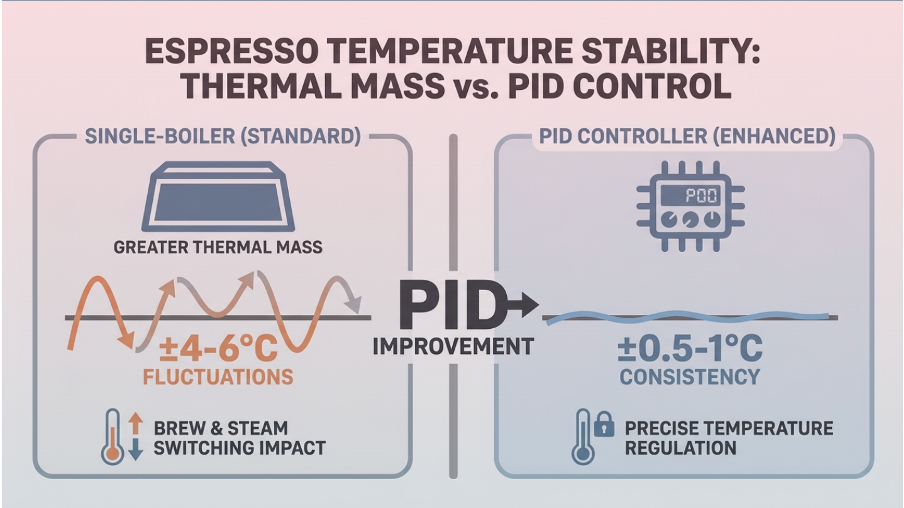
Temperature surfing involves timing the brew cycle to coincide with the machine's optimal temperature point in its heating cycle. While this requires more skill and attention, experienced home baristas often master this technique to achieve remarkably consistent results. The thermal mass that makes single-boiler machines stable also makes them slower to respond to temperature changes, which can be both an advantage and a limitation.
Thermoblock On-Demand Heating Challenges
Thermoblock systems heat water on-demand as it flows through heated metal blocks, creating inherent temperature consistency challenges. These systems often struggle to maintain stable brew temperatures, particularly during longer extractions or when brewing multiple shots consecutively. Temperature variations of ±3°C to ±5°C are commonly observed in thermoblock machines, especially during transitions between shots.
The on-demand heating approach that makes thermoblocks fast also makes them temperature-sensitive. The rapid heating and cooling cycles required for this system can lead to temperature overshoot or undershoot, particularly in lower-end models. While higher-quality thermoblock machines employ sophisticated temperature control systems, they still face fundamental limitations in thermal consistency compared to boiler-based systems.
Steam Performance: The Real Test for Milk-Based Drinks
Steam performance separates good espresso machines from great ones, especially for those who regularly make milk-based drinks. The quality of steamed milk depends on consistent steam pressure, appropriate steam temperature, and the ability to create fine microfoam. These factors directly impact the texture, taste, and visual appeal of cappuccinos and lattes.
Single-Boiler Steam Power and Microfoam Quality
Single-boiler machines typically deliver superior steam performance due to their larger water reservoir capacity. When the boiler reaches steaming temperature (typically around 120°C), it can provide powerful, sustained steam pressure that remains consistent throughout the milk steaming process. This consistent pressure is crucial for creating the fine, velvety microfoam that characterizes professional-quality milk drinks.
The sustained steam power from single-boiler machines makes them particularly effective for steaming larger quantities of milk or creating the tight microfoam necessary for latte art. The steam tends to be drier (less water content) and more powerful, allowing baristas to heat milk quickly while developing proper texture. Professional baristas often prefer this type of steam performance because it provides better control over milk texture development.
Thermoblock Steam Limitations
Thermoblock systems face significant limitations in steam performance compared to boiler-based machines. The on-demand heating system that works adequately for brewing water struggles to provide the sustained high-temperature output needed for quality milk steaming. Thermoblock steam often appears weaker and wetter, containing more water vapor and less dry steam.
These steam quality issues make it considerably harder to create fine microfoam suitable for latte art. Instead of the smooth, glossy microfoam achievable with single-boiler machines, thermoblock systems often produce larger bubbles and less stable foam. The weaker steam pressure also means longer steaming times, which can overheat the milk and create a less pleasant taste and texture.
Workflow Impact: Sequential vs. Simultaneous Operation
Single-boiler machines operate with a sequential workflow that requires planning but delivers superior results. Users must brew espresso first, then typically wait 30 seconds to over 2 minutes for the boiler to heat up to steaming temperature before frothing milk. This workflow limitation represents the primary convenience trade-off for single-boiler quality.
Thermoblock systems can switch between brewing and steaming temperatures more quickly, typically requiring only 15-30 seconds for temperature transitions. However, most traditional single thermoblock designs still cannot brew and steam simultaneously. Both dual boiler machines and some advanced dual thermoblock machines can offer simultaneous operation, though these represent a small segment of the market and typically come at higher price points.
Before you commit to a machine, it's worth understanding exactly how each heating system performs across the criteria that matter most to your daily brewing routine. Use the interactive guide below to explore each factor; click any category to reveal what each system delivers and where it falls short.
Which Espresso Machine Heating System Suits You?
Click each category to explore how single-boiler and thermoblock systems compare.
Data drawn from brewprecision.com — espresso equipment guides for home enthusiasts
As the guide above illustrates, the right choice comes down to one question: do you value the ritual and quality ceiling that a single-boiler machine provides, or does your lifestyle call for the immediacy that thermoblocks offer? Neither answer is wrong but knowing which matters more to you will save you from buying the wrong machine twice.
Durability and Maintenance: What Actually Lasts
Long-term reliability and maintenance requirements differ significantly between single-boiler and thermoblock systems. These differences affect not just the machine's lifespan but also the total cost of ownership over several years of regular use.
Single-Boiler Repairability and Longevity
Single-boiler machines are often noted for their robust construction and repairability. Their simpler design with fewer complex components makes them more straightforward to service and maintain. Quality single-boiler machines, particularly those with all-metal construction using brass or stainless steel boilers, can provide years of reliable service with proper care and regular maintenance.
The standardized components used in many single-boiler machines make repairs more accessible and cost-effective. When issues do arise, they're often related to easily replaceable parts like heating elements, thermostats, or pressure switches. The larger internal components are also more accessible to technicians, making professional servicing more straightforward and less expensive.
Thermoblock Reliability Concerns
Thermoblock systems present several reliability concerns that can impact long-term ownership satisfaction. While thermoblocks are generally less prone to scaling due to their on-demand heating system with no standing water reservoir, they can face other reliability challenges including overheating with rapid use and component integration issues.
The compact, integrated design of thermoblock systems can make repairs more challenging and expensive. The reliability and longevity of thermoblock machines vary significantly based on materials and build quality. Regular maintenance remains important for optimal performance, though the specific requirements differ from boiler-based systems.
User Fit: Speed vs. Quality Trade-Offs in Real Daily Use
The choice between single-boiler and thermoblock machines ultimately depends on individual priorities and usage patterns. Understanding how each system performs in real daily use helps determine which trade-offs are acceptable for your specific situation.
Thermoblock Benefits: Fast and Compact
Thermoblock machines excel in situations where speed and convenience take priority. They heat up rapidly, often reaching brewing temperature in under a minute, making them ideal for quick morning coffee routines. Their compact size and lightweight design make them particularly suitable for smaller kitchens or limited counter space.
The energy efficiency of thermoblocks also appeals to users who make coffee occasionally rather than daily. Since they only heat water on demand, they consume less power during standby periods compared to single-boiler machines that maintain temperature constantly. For users who typically make one or two drinks per session and value convenience over absolute quality, thermoblocks can provide satisfactory results with minimal fuss.
Single-Boiler Benefits: Quality and Performance
Single-boiler machines serve users who prioritize espresso quality and are willing to invest time in their coffee routine. The superior temperature stability during extraction translates directly to more consistent and flavorful espresso shots. The workflow requirements, while slower, encourage a more mindful approach to coffee preparation that many enthusiasts find rewarding.
For users who regularly make milk-based drinks, the steaming performance advantage of single-boiler machines becomes particularly valuable. The ability to create professional-quality microfoam opens up possibilities for latte art and simply better-tasting cappuccinos and lattes. The longer warm-up time (5-10 minutes) encourages routine development and can actually improve the overall coffee experience for dedicated enthusiasts.
For Home Espresso Enthusiasts, Single-Boiler Machines Are the Clear Winner
When evaluating single-boiler versus thermoblock machines specifically for home espresso enthusiasts, the evidence strongly favors single-boiler systems. The superior thermal stability, more powerful steam performance, and better long-term durability align perfectly with the priorities of serious coffee makers. While thermoblocks offer undeniable convenience advantages, these benefits come at the cost of the very qualities that define excellent espresso.
The temperature consistency achieved by single-boiler machines directly translates to more predictable and higher-quality extractions. For enthusiasts investing time in learning proper technique, grind adjustment, and recipe development, the stable thermal platform provided by single-boiler machines becomes essential. The sequential workflow, while requiring more patience, encourages the deliberate approach that leads to consistently better coffee.
The investment in a quality single-boiler machine also represents better long-term value. The combination of superior durability, easier maintenance, and the potential for component-level repairs means lower total ownership costs over the machine's lifespan. For home enthusiasts committed to improving their espresso skills and enjoying café-quality results at home, single-boiler machines provide the foundation necessary for long-term satisfaction and growth in coffee knowledge.
For expert guidance on choosing the right espresso machine for your specific needs and brewing goals, visit Brew Precision where our detailed reviews help home coffee enthusiasts make confident purchasing decisions.